



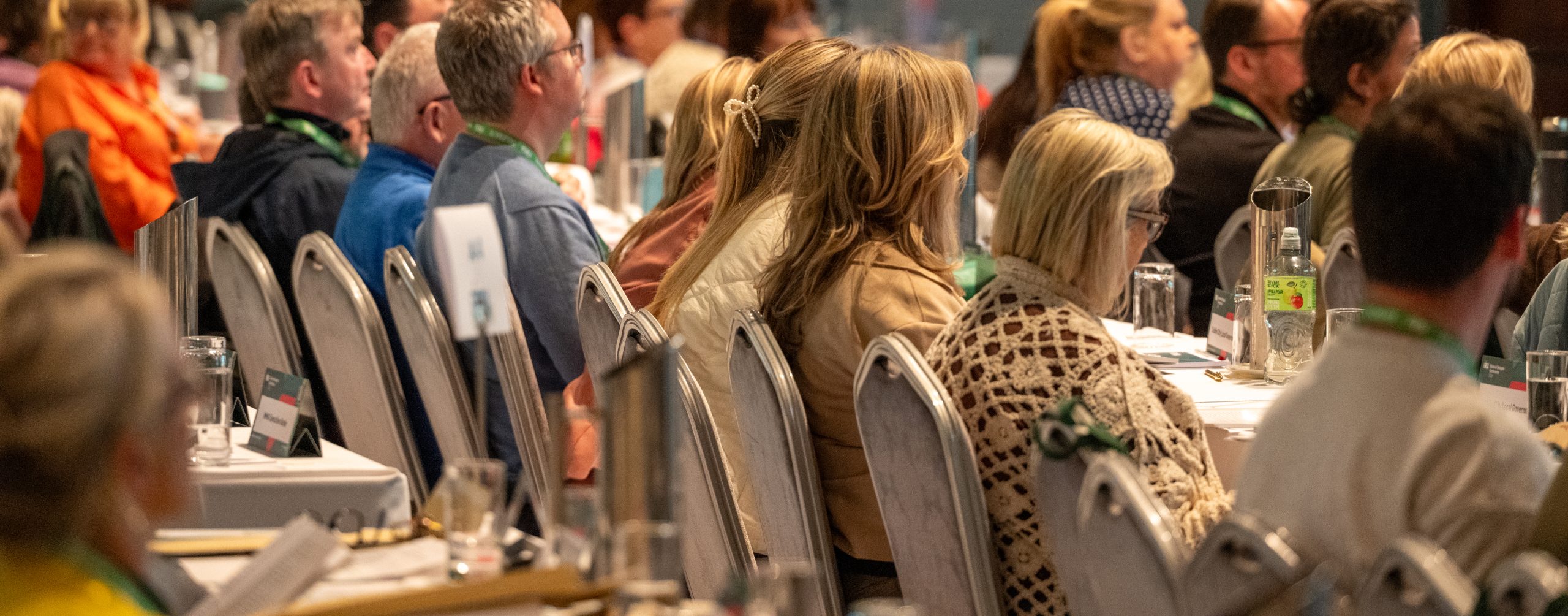
Delegates attending Fórsa trade union’s biennial conference in Killarney today (Thursday) will debate a major motion on pay, living standards and public service negotiations, as unions prepare for what could become the most significant round of public service pay talks in more than a decade.
The debate on the motion is taking place this morning (Thursday), immediately before an address to conference this morning by An Taoiseach Micheál Martin.
The motion, submitted by Fórsa’s National Executive Committee (NEC), sets out the union’s position ahead of negotiations on a successor to the current public service agreement, which expires at the end of June.
It states that workers continue to face significant pressure arising from housing costs, rising grocery and energy bills, fuel and commuting expenses, and wider cost-of-living challenges, as headline inflation has increased in recent months.
The motion notes that many workers have experienced a reduction in disposable income following the withdrawal of temporary State supports and the failure to index tax bands and allowances in line with inflation. The motion also states that members will refuse to co-operate with any new work-related changes, unless they have been the subject of specific agreements with the union.
Fórsa Senior Vice President Julie Flood will tell delegates that the debate on pay comes against a backdrop of growing economic uncertainty internationally, including instability linked to global conflict, fuel market disruption, and rapid technological change driven by artificial intelligence (AI).
Fórsa has said the expected labour market disruption demands recognition by unions, employers and government, and unified action to address the scale and pace of change.
Ms Flood said the next agreement would need to engage with wider “common-good issues” affecting workers and public services, including housing affordability, commuting costs, remote and flexible working arrangements, and the long-term sustainability of public services.
She added: “The housing crisis threatens to undermine decades of social and economic progress. It is now directly affecting recruitment and retention right across the public service. We need to confront that and negotiate solutions that will work.
“Rising living costs, childcare costs and the daily cost of getting to and from work are placing real pressure on working households. If we are serious about maintaining strong public services, then those realities must form part of the conversation,” she said.
The motion underscores Fórsa’s “A Better Deal” campaign, which has attracted more than 45,000 member pledges, calling for pay improvements alongside progress on housing, healthcare investment, local bargaining claims and flexible working arrangements.
It also states that if a negotiated multi-annual agreement cannot be achieved, the union should seek an immediate pay round, pursue local bargaining claims independently, and ballot members for industrial action where necessary.
Ms Flood said Fórsa’s objective remained serious engagement aimed at delivering a deal that members can vote for: “That’s the single most important objective for the union, while maintaining stability during a period of significant economic uncertainty.”
Speaking ahead of conference this week, Fórsa general secretary Kevin Callinan said the union was determined to approach the next phase of negotiations in a serious, organised and constructive manner, while making clear that workers could not continue absorbing the pressure of rising living costs without meaningful action: “Workers want to see fairness, and they need to feel economic progress is being shared. Public servants kept services running through extraordinary periods in recent years.
“They are entitled to a negotiation process that recognises the pressures they now face in their everyday lives. Workers are also entitled to share fairly in the success of the economy, particularly after a prolonged period in which many households have experienced a sustained erosion of spending power.
“We cannot simply repeat the same formula that has shaped public service agreements for the last 15 years. The challenges facing workers and public services have changed, and the approach to negotiations must reflect that reality. We need a much more robust dialogue mechanism,” he said.
The conference continues until tomorrow evening (Friday 15th May).